
![[personal profile]](https://www.dreamwidth.org/img/silk/identity/user.png)


Entry tags:
an attempt at a visual representation
warning for mild (colored) tripophobia
KEY
blue = sensing function; initial point of concrete focus
red = intuitive function; initial point of abstract focus
hardness of shape sides = physical/mental awareness; harder means more focused on one or the other, blurred means less aware of the blurred shape/color and more aware of the background
number of shapes = less indicates seeing something as a whole, more indicates seeing something as multiple elements of substance within a larger substance
size of shapes = selectivity on what the function in question (sensor or intuitive) decides to focus on; larger indicates a bigger picture focus, smaller indicates particular focuses on details (see above with "multiple elements of substance")
direction of shapes = the evenness/adaptation relationship with what is perceived to be the extroverted function
the base shape, representing the world, is the "square." if the shapes within emulate the world (i.e. other squares within the square), this indicates an awareness of presence. other shapes (i.e. circles) indicate an alternate mode of focus - see below.
Se (Extraverted Sensing): is represented by the blue background in the top row. This indicates the physical operations needed, required, or present, and cognitive awareness of it.
Ni (Introverted Intuition): is represented by the red squares in the top row. These are points of mental focus, either in response to or in relation with the the outside world (but can get occupied within their Ni, depending... see below.) They have a fixed number and size
Ne (Extraverted Intuition): is represented by the red background in the bottom row. This indicates the ideas, possibility, and abstract openness that the mind and the outer world can go to.
Si (Introverted Sensing): is represented both by the blue circles and the direction they go to. These are points of physical focus, though since they are circles, they are beyond/not just restricted to the mental defined external possibilities as represented by the Ne, but also practical probabilities as singularly determined by this function. They are also circles because they are not as naturally immersed with what is perceived to be regular/the uncontrolled world (where Ni/Se tries to meet), but rather exists as a separate self-identified "other" world, founded on practicalities, priorities, internal established structure, focus, and needs.
Additionally, a large blue circle or a bunch of blue circles making up a larger blue circles leaves room for the red square to contrast it, as the circle is different from the square and making itself among the red background. Blue circles constructed in a square shape try to fit these practical methods with the preexisting red square world. (see below)

* like to have goals and work with the world while still having at least one point of internal focus; things must be achievable and also MUST require for them to physically (not necessarily, like, sports/construction/etc., just not requiring too much thinking but rather being within the world/constantly improvising and looking for new opportunities - so it's concrete) work for it. can easily come off either as aggressors or air-headed because they tend to be eager to interact with the world, i.e. do (and not necessarily talk/be verbally outgoing with others.) comfortable alone but not comfortable stagnate, the same way the ENXP is comfortable alone but not comfortable unoccupied. esxps live the most fully within the world, sometimes able to see things coming before others if they use their inferior Ni to draw the patterns between the blurred red square to the solid middle. on the other hand, they can be so focused on the single solid middle of their square and overexert their immersed Se that they can completely misdirect, not being able to see the consequences of their actions because they were so focused on the two points without drawing any connection with the blurred edges of the square. initial focus on physicality also may result in performance anxiety or taking action without thinking/at a false (or unhealthily placed) red square, although not prescriptively.

* have an array of things that they know that they do/don't want to mentally partake in (meaning, a subconscious understanding of the self; if they do mentally partake within an uncomfortable realm, they fixate severely intensely in their head); generally fascinated and taken by the outside world and identify points of simultaneous physical/mental comfort almost subconsciously. like an INXJ they are very intent with their presence; unlike an INXJ, an ISXP can work with what they have (what the Fi wants or values/what the Ti is interested in), while gathering mental "tools" along the way. ISXPs like to set goals because it is mentally fulfilling for them (for an INXP it will be more of a relief/moving on), while what they actually do requires less mental work and more mindless action and improvisation. ISXPs do actually enjoy using their brain/mentally figuring things out (the same way INXPs like being methodical/shutting out the world in favor of a task), but they naturally fall into both the ability and fascination with the lack of construction on what is outside of themselves, and what they can (or cannot) gather to internalize. healthily they don't require themselves to set a goal or make intuitive leaps or anticipations; they are able of improvisation but can use that brain work if needed. unhealthily they set and focus too much on the goals and don't really trust themselves to use the blurred lines between these mental anticipations and the concrete (what will happen/what they will do) which can end in long periods of self-inflicted stagnation.

The ENXJ is capable of maintaining a clear focus of mind - as indicated by a singular red square - but also allowing themselves and both the mentality itself to adapt to the physical world outside them. The ENXJ maintains a near-even balance between mental awareness and physical awareness, being able to improvise their singular internal plan with the physical world that they have no control over into it. This is not to say that they are perfect, but rather that their divide between the internal and the external is not necessarily reliant; they are separate from each other. At the same time, with the conscious and hard mental focus, they prioritize that awareness and easily use the physical, uncontrollable world as tools for what the inner world desires.
When the ENXJ loops, they try to use the physical uncontrollable world as a guidance rather than the inner prioritizing they should focus on. They may lose a sense of self or distinguishable goal, as the two are still divided; they ignore the mental focus completely to indulge and rely on the physical world. Healthy ENXJs must understand their inner desires and mental focuses first to allow themselves to utilize what is concrete outside of them, rather than first seeking meaning outside of themselves. They also can healthily value the lack of structure with the physical world, and physical/external values - such as working without planning the next step, partaking physically for the sake of it, working with what they have rather than utilizing what they have gathered - while at the same time maintaining that strong internal sense of self, values, knowledge, and plans in life. They want control, but are good at working with what they have.
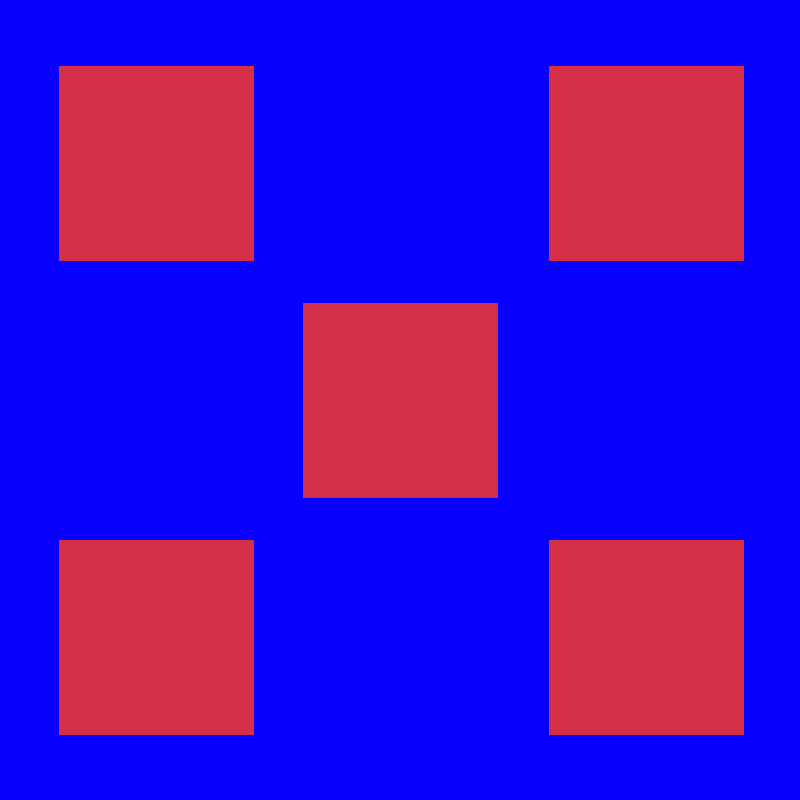
The INXJ begins with points of initial abstraction and understanding in order to prioritize and thusly interact with the outside uncontrollable world. There is the same amount of shapes as ISXPs and INXPs in the INXJs' square, because their inner shapes already emulate both the hardness and the shape itself of the outside world; they are aware of it, they just need to make internal understanding of it first, in their own minds. INXJs see the outside world in smaller, similar-structured worlds in their mind; there is no concrete method, only an abstract emulation and understanding (hence, a relatively equal amount of squares making up a larger square inside the square of the world - not too many since the INXJ does not necessarily naturally connect with a world, just tries to make an understanding of it.)
Ni in general does not work in direction (Si - see above/below), but rather in this internal vs external presence. INXJ pieces together things in their mind so they fit with what, eventually, they try to do. Being hard-edged and square-shaped, they are reliant on this initial internal abstract construction, thus becoming hyper-aware of the physicality filling in the space that the mind cannot, or cannot predict. They utilize their mental presence and understanding to try to continuously fit and work with what initially cannot be mentally understood or anticipated. INXJs have a strong sense of self-preservation in this sense, as when things become overwhelming they withdraw to their mental worlds (which feel as real/mentally present with them as the outside) and reject consequences/actions/awareness of the outside world. They also constantly gather data from the outside world to interpret it on the inside and then spit it back out to construct the world to their liking, or to try to feel more at one with concreteness/physicality, thus spending a lot of time gathering all the tools they need before using them in a way that they internally pieced together without external influence, but rather deliberately fitting their internal self with their outer self; the physical world is their concrete projecting ground.

The ENXP has two very strong modes between their relationship with the external, abstract world (red background) and their ability to focus practically, to the point where it's the only point of relevance that nothing else is within their blue-circled scope of "necessary" (hence, ENXPs tending to forget to eat/sleep/etc. when every bit of presence of mind and physical work is hyper-focused on something singular.) However, as the large blue circle does represent their physical focus, they operate with that initial seeking and discovering the uncontained abstractions of what the world will throw at them. They are constantly looking for what is within the red space, in hopes to find something that their blue circle can settle on. Of course, sometimes they can spend too much time in that space and never really settle down, but that depends from person to person.
ENXPs are often regarded as the silly, meme-y, random ones, with how much they are simultaneously in the outside world (mentally) and their own (still mentally.) However, they are very capable of being efficient and hard-working people when assigned to a task that their blue separate circle, away from the outside world, values and wants to achieve. This especially goes for looping ENFPs (who disregard their feelings in favor of a task), or healthy ENTPs (who are capable of prioritizing what they would like to do and how it needs to be done while remaining concerned for their own/others' feelings.) Additionally, ENXPs may hold things already inside this "circle" - e.g. memories, old hobbies/interests, friends they currently or formerly valued, superficial things that have been initially established in this circle of priority - very close to them, and in fact will not look to the outside world (red space) to change that.

The INXP constantly looks for new things that they can value and identify as important, and then work effectively within their own natural ability to be practical with it. Their blue circles fixate on a point of importance, usually in a desire to take something undefined or from the world, and make it into their own, utilizing concentrated bluespace to immerse these ideas into the red (the real world.) The INXP values the direction of mind - the red space - over the work itself, but through their work ethic, they can get very caught up in one or multiple tasks that they disregard otherwise necessities, like eating or sleeping or physical presence, subconsciously in favor of what they identify as more important. They still like new ideas more (thus why there are the same amount of shapes here as in the INXJ and the ISXP - all three of these heavily value the personal interaction and application with how the external world can be internally sorted and crafted into something fulfilling, in similar and equal ways), but easily tap into structure and hyper-efficient work ethic to work them out.
An unhealthy INXP will become reliant on these structures, fixated on an idea that they may perceive to be Ne when it is really just the pre-established Si/blue circle comfort, as even though the INXP looks more outward into the red space for the newness, they still approach it with that individuality and separation, especially already divided to sort of work with the abstract identified outside (in the square-forming circles) rather than bouncing between selectivity and openness (like an ENXP.) Unhealthy INXPs become distressed and try to force the world and others to work within their construction, sometimes becoming totalitarian or overbearing. Ultimately INXPs are naturally immersed in the newness of the world and all the possibilities it holds, generally looking for things for the healthy INXP to snag up and bring into their self-immersed but not too selective circles.

* know how to do stuff, look in the Ne space for what can be changed/room for plans/altering, but fall into methodical thinking (when healthy) to push for their dom function, being incredibly adept at sorting from what is important to what is. unhealthily will try too many things at once or overexert themselves in external abstraction/redspace since it's already so naturally open and accessible to them; need to recognize that they do in fact like structure at core, but can use the external world for inspiration, spontaneity, or improvisation, in terms of ideals

* all of their details are big picture, all of their big pictures are detailed; necessities are individual tasks, personal goals are individual tasks, daily life is divided into individual tasks, they approach everything with individual Si focus, making them mostly incredibly focused and grounded despite that each of these Si bits are circles. when healthy, can naturally infuse the external Ne world into their spots of focus to allow room for unpredictability/lack of structure/new ideas. sometimes can get too focused on their many many blue spaces and forget that the redspace exists. sometimes can get hyper-aware of their redspace exist and the blue space becomes jumbled/less defined for them since the internal eye is so preoccupied with external abstractions that the person themselves has no grounding. the blue circles can also be comfort zones; ISXJs/INXPs in particular have comfort zones that hold more meaning to them that exist within the world, like memories or ex-friends/partners or anything else that contributes to their identity (e.g. hobbies, interests), while ESXJs' and ENXPs' tend to be more, again, superficial, e.g. old things that they rather can't let go of for really no reason other than it's there, and sometimes older methods that they feel tempted to rely on. ISXJs and INXPs tend to have more reasoning with using an "old" method (it fits within their blue circles-shaped-like-a-square, i.e. their approaches to defining the world), while ESXJs and ENXPs are more clingy (they reject the redspace while being aware of it, i.e. they recognize the benefits of doing something new but want to do the old thing anyway.) isxjs are the most effective at prioritizing and getting things done, having a subconscious sense of simultaneously creating and following a plan. isxjs react immediately, similar to esxps, but rather than reacting based on the external environment, isxjs react immediately based on their internal values (usually as affected by T/F judgments.) an isxj is actually pretty readable as an isxj, but it may be obvious to everyone but themselves since despite the amount of detail they put and see in their everyday lives, they see themselves more as a whole of these simultaneous working of all these small blue circles together, which usually results in stubbornness, distorted self-perception, or trying to fit the whole of their identity into another small circle amongst the rest of their small circles. isxjs tend to mistype a lot because if they find something that fits comfortably into one of their blue circles, even if it's inaccurate, they'll immediately type themselves as such and may be reluctant to move out, change it, or see themselves as otherwise.
 |  |  |  |
| ESxP | ISxP | ENxJ | INxJ |
 |  |  |  |
| ENxP | INxP | ESxJ | ISxJ |
KEY
blue = sensing function; initial point of concrete focus
red = intuitive function; initial point of abstract focus
hardness of shape sides = physical/mental awareness; harder means more focused on one or the other, blurred means less aware of the blurred shape/color and more aware of the background
number of shapes = less indicates seeing something as a whole, more indicates seeing something as multiple elements of substance within a larger substance
size of shapes = selectivity on what the function in question (sensor or intuitive) decides to focus on; larger indicates a bigger picture focus, smaller indicates particular focuses on details (see above with "multiple elements of substance")
direction of shapes = the evenness/adaptation relationship with what is perceived to be the extroverted function
the base shape, representing the world, is the "square." if the shapes within emulate the world (i.e. other squares within the square), this indicates an awareness of presence. other shapes (i.e. circles) indicate an alternate mode of focus - see below.
Se (Extraverted Sensing): is represented by the blue background in the top row. This indicates the physical operations needed, required, or present, and cognitive awareness of it.
Ni (Introverted Intuition): is represented by the red squares in the top row. These are points of mental focus, either in response to or in relation with the the outside world (but can get occupied within their Ni, depending... see below.) They have a fixed number and size
Ne (Extraverted Intuition): is represented by the red background in the bottom row. This indicates the ideas, possibility, and abstract openness that the mind and the outer world can go to.
Si (Introverted Sensing): is represented both by the blue circles and the direction they go to. These are points of physical focus, though since they are circles, they are beyond/not just restricted to the mental defined external possibilities as represented by the Ne, but also practical probabilities as singularly determined by this function. They are also circles because they are not as naturally immersed with what is perceived to be regular/the uncontrolled world (where Ni/Se tries to meet), but rather exists as a separate self-identified "other" world, founded on practicalities, priorities, internal established structure, focus, and needs.
Additionally, a large blue circle or a bunch of blue circles making up a larger blue circles leaves room for the red square to contrast it, as the circle is different from the square and making itself among the red background. Blue circles constructed in a square shape try to fit these practical methods with the preexisting red square world. (see below)
ESXP
* like to have goals and work with the world while still having at least one point of internal focus; things must be achievable and also MUST require for them to physically (not necessarily, like, sports/construction/etc., just not requiring too much thinking but rather being within the world/constantly improvising and looking for new opportunities - so it's concrete) work for it. can easily come off either as aggressors or air-headed because they tend to be eager to interact with the world, i.e. do (and not necessarily talk/be verbally outgoing with others.) comfortable alone but not comfortable stagnate, the same way the ENXP is comfortable alone but not comfortable unoccupied. esxps live the most fully within the world, sometimes able to see things coming before others if they use their inferior Ni to draw the patterns between the blurred red square to the solid middle. on the other hand, they can be so focused on the single solid middle of their square and overexert their immersed Se that they can completely misdirect, not being able to see the consequences of their actions because they were so focused on the two points without drawing any connection with the blurred edges of the square. initial focus on physicality also may result in performance anxiety or taking action without thinking/at a false (or unhealthily placed) red square, although not prescriptively.
ISXP
* have an array of things that they know that they do/don't want to mentally partake in (meaning, a subconscious understanding of the self; if they do mentally partake within an uncomfortable realm, they fixate severely intensely in their head); generally fascinated and taken by the outside world and identify points of simultaneous physical/mental comfort almost subconsciously. like an INXJ they are very intent with their presence; unlike an INXJ, an ISXP can work with what they have (what the Fi wants or values/what the Ti is interested in), while gathering mental "tools" along the way. ISXPs like to set goals because it is mentally fulfilling for them (for an INXP it will be more of a relief/moving on), while what they actually do requires less mental work and more mindless action and improvisation. ISXPs do actually enjoy using their brain/mentally figuring things out (the same way INXPs like being methodical/shutting out the world in favor of a task), but they naturally fall into both the ability and fascination with the lack of construction on what is outside of themselves, and what they can (or cannot) gather to internalize. healthily they don't require themselves to set a goal or make intuitive leaps or anticipations; they are able of improvisation but can use that brain work if needed. unhealthily they set and focus too much on the goals and don't really trust themselves to use the blurred lines between these mental anticipations and the concrete (what will happen/what they will do) which can end in long periods of self-inflicted stagnation.
ENXJ
The ENXJ is capable of maintaining a clear focus of mind - as indicated by a singular red square - but also allowing themselves and both the mentality itself to adapt to the physical world outside them. The ENXJ maintains a near-even balance between mental awareness and physical awareness, being able to improvise their singular internal plan with the physical world that they have no control over into it. This is not to say that they are perfect, but rather that their divide between the internal and the external is not necessarily reliant; they are separate from each other. At the same time, with the conscious and hard mental focus, they prioritize that awareness and easily use the physical, uncontrollable world as tools for what the inner world desires.
When the ENXJ loops, they try to use the physical uncontrollable world as a guidance rather than the inner prioritizing they should focus on. They may lose a sense of self or distinguishable goal, as the two are still divided; they ignore the mental focus completely to indulge and rely on the physical world. Healthy ENXJs must understand their inner desires and mental focuses first to allow themselves to utilize what is concrete outside of them, rather than first seeking meaning outside of themselves. They also can healthily value the lack of structure with the physical world, and physical/external values - such as working without planning the next step, partaking physically for the sake of it, working with what they have rather than utilizing what they have gathered - while at the same time maintaining that strong internal sense of self, values, knowledge, and plans in life. They want control, but are good at working with what they have.
INXJ
The INXJ begins with points of initial abstraction and understanding in order to prioritize and thusly interact with the outside uncontrollable world. There is the same amount of shapes as ISXPs and INXPs in the INXJs' square, because their inner shapes already emulate both the hardness and the shape itself of the outside world; they are aware of it, they just need to make internal understanding of it first, in their own minds. INXJs see the outside world in smaller, similar-structured worlds in their mind; there is no concrete method, only an abstract emulation and understanding (hence, a relatively equal amount of squares making up a larger square inside the square of the world - not too many since the INXJ does not necessarily naturally connect with a world, just tries to make an understanding of it.)
Ni in general does not work in direction (Si - see above/below), but rather in this internal vs external presence. INXJ pieces together things in their mind so they fit with what, eventually, they try to do. Being hard-edged and square-shaped, they are reliant on this initial internal abstract construction, thus becoming hyper-aware of the physicality filling in the space that the mind cannot, or cannot predict. They utilize their mental presence and understanding to try to continuously fit and work with what initially cannot be mentally understood or anticipated. INXJs have a strong sense of self-preservation in this sense, as when things become overwhelming they withdraw to their mental worlds (which feel as real/mentally present with them as the outside) and reject consequences/actions/awareness of the outside world. They also constantly gather data from the outside world to interpret it on the inside and then spit it back out to construct the world to their liking, or to try to feel more at one with concreteness/physicality, thus spending a lot of time gathering all the tools they need before using them in a way that they internally pieced together without external influence, but rather deliberately fitting their internal self with their outer self; the physical world is their concrete projecting ground.
ENXP
The ENXP has two very strong modes between their relationship with the external, abstract world (red background) and their ability to focus practically, to the point where it's the only point of relevance that nothing else is within their blue-circled scope of "necessary" (hence, ENXPs tending to forget to eat/sleep/etc. when every bit of presence of mind and physical work is hyper-focused on something singular.) However, as the large blue circle does represent their physical focus, they operate with that initial seeking and discovering the uncontained abstractions of what the world will throw at them. They are constantly looking for what is within the red space, in hopes to find something that their blue circle can settle on. Of course, sometimes they can spend too much time in that space and never really settle down, but that depends from person to person.
ENXPs are often regarded as the silly, meme-y, random ones, with how much they are simultaneously in the outside world (mentally) and their own (still mentally.) However, they are very capable of being efficient and hard-working people when assigned to a task that their blue separate circle, away from the outside world, values and wants to achieve. This especially goes for looping ENFPs (who disregard their feelings in favor of a task), or healthy ENTPs (who are capable of prioritizing what they would like to do and how it needs to be done while remaining concerned for their own/others' feelings.) Additionally, ENXPs may hold things already inside this "circle" - e.g. memories, old hobbies/interests, friends they currently or formerly valued, superficial things that have been initially established in this circle of priority - very close to them, and in fact will not look to the outside world (red space) to change that.
INXP
The INXP constantly looks for new things that they can value and identify as important, and then work effectively within their own natural ability to be practical with it. Their blue circles fixate on a point of importance, usually in a desire to take something undefined or from the world, and make it into their own, utilizing concentrated bluespace to immerse these ideas into the red (the real world.) The INXP values the direction of mind - the red space - over the work itself, but through their work ethic, they can get very caught up in one or multiple tasks that they disregard otherwise necessities, like eating or sleeping or physical presence, subconsciously in favor of what they identify as more important. They still like new ideas more (thus why there are the same amount of shapes here as in the INXJ and the ISXP - all three of these heavily value the personal interaction and application with how the external world can be internally sorted and crafted into something fulfilling, in similar and equal ways), but easily tap into structure and hyper-efficient work ethic to work them out.
An unhealthy INXP will become reliant on these structures, fixated on an idea that they may perceive to be Ne when it is really just the pre-established Si/blue circle comfort, as even though the INXP looks more outward into the red space for the newness, they still approach it with that individuality and separation, especially already divided to sort of work with the abstract identified outside (in the square-forming circles) rather than bouncing between selectivity and openness (like an ENXP.) Unhealthy INXPs become distressed and try to force the world and others to work within their construction, sometimes becoming totalitarian or overbearing. Ultimately INXPs are naturally immersed in the newness of the world and all the possibilities it holds, generally looking for things for the healthy INXP to snag up and bring into their self-immersed but not too selective circles.
ESXJ
* know how to do stuff, look in the Ne space for what can be changed/room for plans/altering, but fall into methodical thinking (when healthy) to push for their dom function, being incredibly adept at sorting from what is important to what is. unhealthily will try too many things at once or overexert themselves in external abstraction/redspace since it's already so naturally open and accessible to them; need to recognize that they do in fact like structure at core, but can use the external world for inspiration, spontaneity, or improvisation, in terms of ideals
ISXJ
* all of their details are big picture, all of their big pictures are detailed; necessities are individual tasks, personal goals are individual tasks, daily life is divided into individual tasks, they approach everything with individual Si focus, making them mostly incredibly focused and grounded despite that each of these Si bits are circles. when healthy, can naturally infuse the external Ne world into their spots of focus to allow room for unpredictability/lack of structure/new ideas. sometimes can get too focused on their many many blue spaces and forget that the redspace exists. sometimes can get hyper-aware of their redspace exist and the blue space becomes jumbled/less defined for them since the internal eye is so preoccupied with external abstractions that the person themselves has no grounding. the blue circles can also be comfort zones; ISXJs/INXPs in particular have comfort zones that hold more meaning to them that exist within the world, like memories or ex-friends/partners or anything else that contributes to their identity (e.g. hobbies, interests), while ESXJs' and ENXPs' tend to be more, again, superficial, e.g. old things that they rather can't let go of for really no reason other than it's there, and sometimes older methods that they feel tempted to rely on. ISXJs and INXPs tend to have more reasoning with using an "old" method (it fits within their blue circles-shaped-like-a-square, i.e. their approaches to defining the world), while ESXJs and ENXPs are more clingy (they reject the redspace while being aware of it, i.e. they recognize the benefits of doing something new but want to do the old thing anyway.) isxjs are the most effective at prioritizing and getting things done, having a subconscious sense of simultaneously creating and following a plan. isxjs react immediately, similar to esxps, but rather than reacting based on the external environment, isxjs react immediately based on their internal values (usually as affected by T/F judgments.) an isxj is actually pretty readable as an isxj, but it may be obvious to everyone but themselves since despite the amount of detail they put and see in their everyday lives, they see themselves more as a whole of these simultaneous working of all these small blue circles together, which usually results in stubbornness, distorted self-perception, or trying to fit the whole of their identity into another small circle amongst the rest of their small circles. isxjs tend to mistype a lot because if they find something that fits comfortably into one of their blue circles, even if it's inaccurate, they'll immediately type themselves as such and may be reluctant to move out, change it, or see themselves as otherwise.